
Scaling and Root Planing
Understanding Periodontal Health and Disease
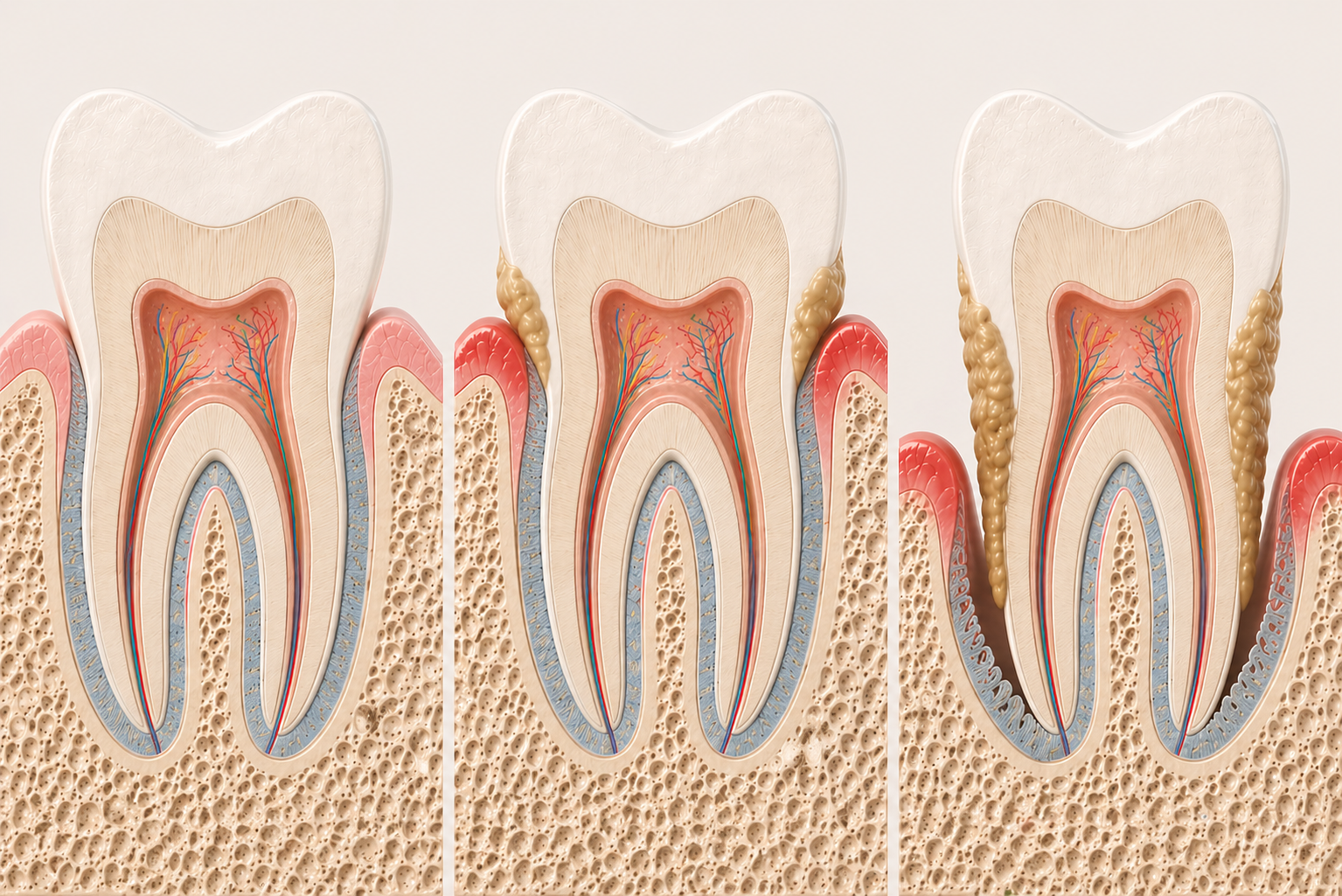
Periodontal health describes the condition of the supporting tissues of the teeth, including the gingiva, periodontal ligament, and alveolar bone. It is distinct from the health of the teeth themselves. Teeth may appear structurally intact while the underlying support has already been compromised.
Changes in periodontal health are typically gradual and asymptomatic, with clinical signs often emerging after significant tissue loss has occurred. In more advanced stages, disease is defined by irreversible loss of supporting bone, accompanied by gingival recession, and, in some cases, tooth mobility or loss. Tooth loss is not an inevitable consequence of aging, but rather the result of a pathologic process affecting the supporting structures.
ANNUAL EVALUATION
Comprehensive periodontal examination
Radiographic assessment of alveolar bone levels
Clinical evaluation of gingival tissue, inflammatory status, and occlusion
Individualized risk assessment
Salivary diagnostics (if indicated)
TREATMENT
Treatment is individualized and guided by the patient’s periodontal status:
Mechanical debridement to disrupt and remove subgingival biofilm and calculus
Salivary diagnostics and targeted pharmacologic agents to assess and modulate the microbial environment
Periodontal maintenance at intervals to maintain disease stability
Understanding Preventive and Periodontal Treatment
Dental cleanings are not uniform procedures. The type of care recommended is determined by the condition of the supporting tissues rather than by routine:
-
Indicated for patients with periodontal health.
Bacterial deposits are confined above or slightly below the gumline, and the supporting bone remains intact. Treatment is preventive in nature—focused on maintaining stability and preventing disease onset. -
Indicated when there is evidence of periodontal disease. Clinical finding include increased probing depths, radiographic bone loss, and bleeding on probing. In this setting, bacteria extend into deeper subgingival environments that cannot be managed with routine cleaning. Treatment is directed at decontaminating root surfaces and disrupting the microbial biofilm within these areas to control infection and halt progression. Local anesthetic is provided to ensure comfort.
-
Indicated following treatment of periodontal disease. Once bone loss has occurred, the condition is managed rather than reversed. Periodontal maintenance is a specialized, ongoing therapy designed to preserve stability by targeting areas of prior involvement at regular intervals.
Important Considerations
Periodontal disease is associated with systemic conditions including cardiovascular disease, Alzheimer’s disease, diabetes, and adverse pregnancy outcomes, highlighting its broader impact on overall health.
When bone loss occurs, it is often accompanied by gingival recession, leading to root exposure and increased sensitivity. In these cases, whitening should be approached with caution. Once periodontal health is stabilized, bone or soft tissue grafting may be considered to improve coverage and reduce sensitivity.